
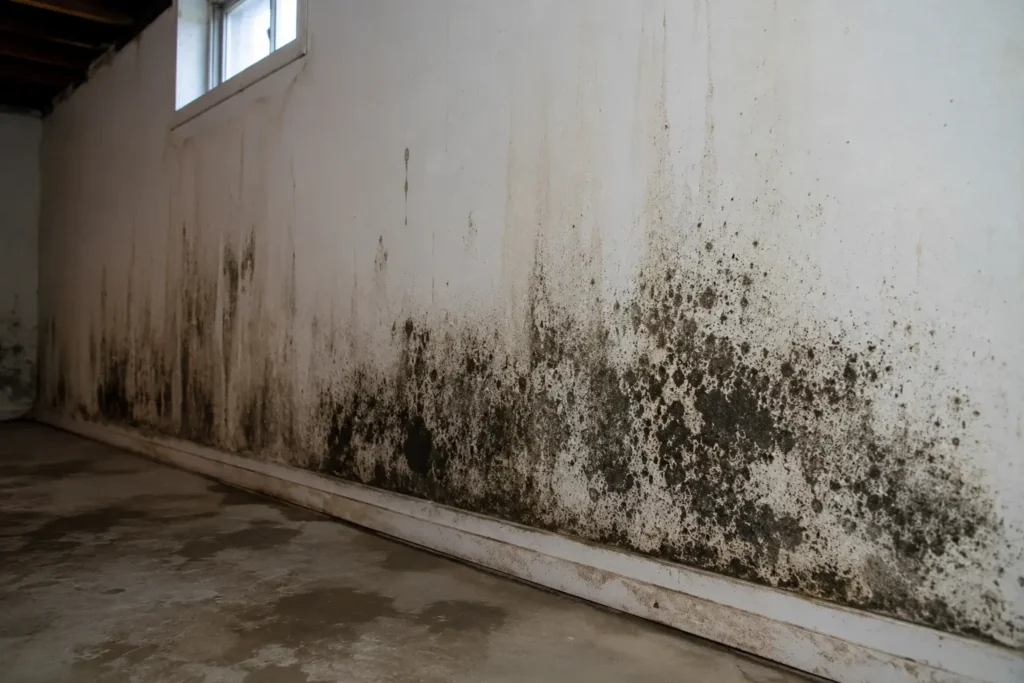
You notice a dark, fuzzy patch on the bathroom ceiling or behind a stack of boxes in the garage, and the first thing that comes to mind is “black mold.” For most homeowners, that phrase brings on immediate worry about health, home value, and cost.
The situation is usually more manageable than the internet makes it sound, but it should not be ignored. This guide explains what black mold is, whether it is dangerous, why it shows up so often in Fort Worth homes, and the steps to take right away.
What Is Black Mold?
“Black mold” usually refers to Stachybotrys chartarum, a greenish-black mold that grows on materials with a lot of cellulose, such as drywall paper, wood, ceiling tiles, and cardboard. It needs constant moisture, so it tends to appear only after materials stay wet for a week or more.
Color alone cannot tell you what you have. Many molds look dark or black, including common species that grow on bathroom grout and window sills. Some Stachybotrys colonies look gray or brown. The only reliable way to identify a mold is lab analysis, and even then the practical question is the same: is there moisture, and how much material is affected?
A mold problem has three signs to look for: visible growth, a persistent musty smell, and a history of water intrusion. Any one of them is enough to investigate.
Is Black Mold Dangerous?
The honest answer is that it depends on the person and the exposure.
Health agencies such as the CDC note that there is no such thing as a “toxic mold” that is dangerous in every situation, and that mold exposure affects people differently. Still, indoor mold is linked to real symptoms, especially for sensitive people.
Common reactions include:
- Sneezing, runny or stuffy nose
- Coughing and throat irritation
- Itchy or watery eyes
- Skin irritation
- Wheezing or shortness of breath
People with asthma, allergies, weakened immune systems, or chronic lung conditions are more likely to have stronger reactions, as are infants and older adults. If someone in your home has ongoing breathing problems or symptoms that improve when they leave the house, talk to a doctor. This article is general information, not medical advice.
Even setting health aside, mold is destructive. It feeds on the materials it grows on, so ignoring it lets a small patch turn into damaged drywall, insulation, and framing. Removing it early is almost always cheaper than removing it later.
Why Black Mold Grows in Fort Worth Homes
Mold needs moisture, organic material, and time. North Texas homes provide all three more often than people expect.
Humidity:- Long, humid summers mean indoor air often carries a lot of moisture, particularly in homes with poorly balanced air conditioning. If your house feels damp or sticky even with the AC running, that is worth investigating.
Air conditioning condensation:- AC systems pull water out of the air. Clogged drain lines, leaking ducts, and sweating air handlers in attics and closets are common sources of hidden moisture.
Storm and roof damage:- Heavy rain and hail can damage roofs and flashing. A small leak can soak attic insulation and decking for weeks before anyone sees a stain.
Plumbing leaks:- Slow leaks behind walls, under sinks, and around water heaters and washing machines can keep materials damp for a long time.
Foundation and drainage problems:- Poor grading, clogged gutters, and shifting soil can send water toward the foundation, leading to damp crawl spaces and basements or lower-level rooms.
If you recently had a flood, a burst pipe, or a roof leak, it is worth acting fast. Our water damage restoration team dries and treats affected areas to help prevent mold from taking hold in the first place.
Where Black Mold Hides in a House
Visible mold is often just the surface. Check these common areas:
- Attics: Roof leaks and poor ventilation create damp insulation and dark staining on decking. See our guide to attic mold remediation.
- Basements and lower levels: Water seeping through walls or floors can leave mold on drywall, stored items, and framing. Learn about basement mold cleanup.
- Crawl spaces: Damp soil and poor ventilation can spread mold across joists and subfloor. Our crawl space decontamination service covers this.
- Bathrooms and kitchens: Look behind toilets, under sinks, around tubs, and along ceilings under bathrooms.
- Around HVAC equipment: Check closets, vents, and drain pans.
- Behind furniture and wallpaper: Mold often grows where air doesn’t circulate.
A musty smell with no visible source usually means moisture is trapped behind a wall or ceiling.
What to Do If You Find Black Mold
If you spot something suspicious, take these steps in order.
1. Don’t disturb it:- Scrubbing, sanding, or blowing air across mold can release spores into the rest of your home. Keep fans off in the affected room and close the door.
2. Find and stop the moisture:- Mold will come back unless the water source is fixed. Turn off leaking supply lines, repair drain lines, and address roof or plumbing problems.
3. Limit exposure:- Keep children, older adults, pets, and anyone with breathing problems away from the area.
4. Take photos:- Document what you see and where. This is useful for a professional assessment and for insurance claims.
5. Get an inspection:- Because you cannot judge a mold problem by looking at it, a professional mold inspection can identify how far it has spread and where the moisture is coming from. If you are concerned about airborne spores, air quality testing can help.
6. Skip the bleach:- Bleach is not recommended for mold on porous surfaces like drywall and wood. It may remove color while leaving the mold’s roots in place.
DIY or Professional Removal?
For a small area of surface mold, such as a few square feet on a non-porous surface, careful cleaning is often reasonable. The EPA suggests that areas under about 10 square feet can typically be handled by homeowners who protect themselves with gloves, eye protection, and a proper mask.
Call a professional when:
- The area is larger than about 10 square feet
- Mold is inside walls, ceilings, HVAC systems, or crawl spaces
- The cause is sewage or contaminated water
- Someone in the home has asthma, allergies, or a weakened immune system
- The problem keeps coming back
- You are not sure how far it has spread
Texas also has licensing rules that matter here. Under the Texas Mold Assessment and Remediation Rules, projects involving 25 or more contiguous square feet of mold generally require licensed professionals, and the assessor and remediator must be different companies. If you’re unsure whether your project falls under these rules, confirm with the Texas Department of Licensing and Regulation or ask your contractor to show their licenses.
What Professional Black Mold Removal Involves
Proper black mold removal is a process, not a surface cleaning. It typically includes:
- Assessment: Locating the mold and the moisture source.
- Containment: Sealing the work area with barriers and negative air pressure so spores do not spread.
- Air filtration: Running HEPA air scrubbers to capture airborne particles.
- Removal: Cutting out and safely bagging materials that cannot be cleaned, such as heavily affected drywall or insulation.
- Cleaning: HEPA vacuuming and treating salvageable surfaces.
- Drying and repair: Bringing materials to safe moisture levels before rebuilding.
- Odor treatment: Lingering smells are addressed through odor elimination treatment.
- Verification: Confirming the work was successful.
For heavy or hazardous situations, see our toxic mold treatment page. If you need help quickly, our 24-hour mold services are available.
Choosing the right company matters as much as the work itself. Our guide on choosing a mold remediation service in Fort Worth covers what to ask.
How to Prevent Black Mold From Coming Back
- Keep indoor humidity between roughly 30 and 50 percent; an inexpensive hygrometer will tell you.
- Run bathroom and kitchen exhaust fans, and vent them outside.
- Fix leaks within 24 to 48 hours.
- Replace air filters regularly and have your AC drain line checked.
- Keep gutters clear and make sure the ground slopes away from your foundation.
- Dry wet materials, carpets, and furniture quickly after spills or storms.
- Inspect attics, crawl spaces, and areas around plumbing once or twice a year.
The Bottom Line
Black mold is not a reason to panic, but it is a reason to act. The dangers depend on who lives in your home and how much mold is present, and the damage grows the longer moisture stays. Stop the water, avoid disturbing the mold, and get a professional assessment if the area is large, hidden, or affecting anyone’s health.
If you’re dealing with mold anywhere in the Fort Worth area, our team can inspect your home and explain your options. Call (817) 508-6755 or visit our contact page to schedule an inspection. We also serve many surrounding communities, which you can see on our areas we serve page. Return to our homepage for a full list of services.
Leave a Reply