
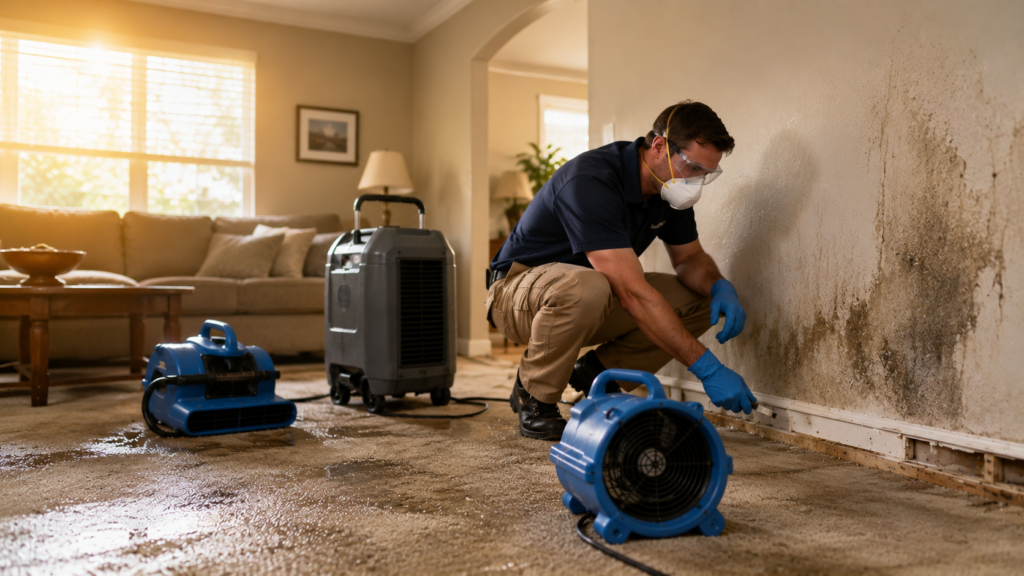
When a pipe bursts at 2 a.m. or a kitchen fire fills your home with smoke and soot, the first hour matters more than almost any other decision you’ll make about your property. Haltom City homeowners face a specific mix of risks – aging plumbing in older neighborhoods, flash flooding from North Texas storms, and the kind of humidity that turns a small leak into a mold problem within 48 hours. This guide walks through what emergency fire and water damage restoration actually involves, how fast you need to move, and what to expect from a professional emergency restoration service in Haltom City.
Emergency Restoration Service in Haltom City, TX
When water is coming up through the floor or smoke has filled the house, you need an emergency restoration service in Haltom City that picks up fast – not a callback tomorrow. We’re one of the fire and flood restoration companies in Haltom City, TX that homeowners call the moment a leak is coming from a pipe, an appliance, or the roof. From your first call, we walk you through the assessment process so you know exactly what happens next.
Why Haltom City Properties Are Especially Vulnerable
Haltom City sits in the Fort Worth metro’s flood-prone corridor along the Trinity River watershed, and its housing stock skews older, with plumbing and roofing systems that weren’t built for today’s storm intensity. That combination means two things happen more often here than in newer suburbs: water intrusion from burst pipes or roof failures, and secondary damage – mold, wood rot, and structural weakening – that sets in before homeowners even realize there’s a problem.
Fire damage compounds this. A fire is rarely just a fire. Firefighting efforts introduce large volumes of water into a structure, and the combination of heat, soot, and moisture creates ideal conditions for mold growth within days if the property isn’t dried and treated properly. This is why the most reliable damage restoration services in Haltom City treat fire and water damage as a single, coordinated process rather than two separate jobs.
Haltom City Disaster Restoration You Can Count On
Storm damage, a burst pipe, or a house fire – whatever caused it, our haltom city disaster restoration team handles the cleanup start to finish. We’re a damage restoration company in Haltom City, TX that deals with everything from a cabinet that’s still damp weeks later to contents that need to be pulled, cleaned, and stored while repairs happen. Ask us for a free quote before any work begins, so there are no surprises.
The First 24 Hours: What Actually Needs to Happen
Restoration professionals talk about the “24-48 hour window” for a reason – it’s the point at which water damage transitions from a repair problem into a mold problem. Here’s what should happen immediately after a fire or flood event:
1. Safety assessment:- Before anyone re-enters a fire-damaged structure, electrical systems, structural integrity, and air quality need to be checked. Smoke and soot particles can circulate through HVAC systems and settle into rooms far from the fire’s origin.
2. Water extraction:- Standing water – whether from a burst pipe, storm flooding, or firefighting runoff – needs to be pumped out immediately using industrial equipment, not shop-vacs. A trained water damage restoration crew will typically be on-site with extraction equipment within hours of a call, not days.
3. Moisture mapping:- Professionals use moisture meters and thermal imaging to identify water that has migrated into walls, subflooring, and insulation – damage that isn’t visible to the naked eye but drives mold growth if left untreated.
4. Structural drying:- Industrial air movers and dehumidifiers are set up to dry the structure over several days. This is a distinct phase from extraction, and skipping it is the single most common reason homeowners end up with a mold problem weeks later. Proper structural drying services typically run for three to five days with daily moisture monitoring.
5. Soot and smoke remediation:- For fire damage specifically, surfaces need specialized cleaning agents to remove soot residue and neutralize smoke odor, which otherwise embeds itself in drywall, fabric, and wood over time.
The Environmental Protection Agency’s guidance on flood cleanup echoes this timeline: materials that stay wet for more than two days typically start developing mold, which is exactly why speed is the single biggest factor in preventing a secondary mold outbreak after a fire or flood. You can review the EPA’s full flood cleanup guidance here.
Fire Damage: The Water Problem Nobody Talks About
Most people picture fire damage as burned wood and blackened walls. In reality, water is often the larger long-term threat. Firefighting can introduce thousands of gallons of water into a structure, and that water doesn’t discriminate – it soaks into carpet padding, drywall, insulation, and subflooring throughout the home, not just near the fire’s origin.
This is why fire and water damage restoration in Haltom City needs to be handled by a team that understands both disciplines. A contractor who only handles smoke and soot cleanup but doesn’t extract and dry the water underneath will leave you with a structure that looks clean but is actively growing mold inside the walls within a week or two.
Flood and Storm Damage: North Texas’s Recurring Risk
Flash flooding is one of the more predictable disasters in the DFW area, and Haltom City’s mix of aging drainage infrastructure and clay soil (which doesn’t absorb water well) makes localized flooding a recurring issue during heavy spring and summer storms. Homeowners dealing with storm-driven flood damage restoration in Haltom City should expect the same extraction-drying-monitoring process described above, with extra attention paid to crawl spaces and foundations, where floodwater tends to linger longest.
FEMA and Ready.gov both recommend documenting flood damage thoroughly with photos before cleanup begins, both for insurance purposes and for your own safety records. You can find general storm and flood preparedness resources at Ready.gov.
Why Speed Determines Your Mold Risk
There’s a direct, well-documented relationship between how quickly water is removed and dried, and whether mold takes hold. This is the core reason restoration and mold prevention aren’t really separate services – they’re two ends of the same emergency response. A property that sits wet for even 48–72 hours after a fire or flood has a dramatically higher chance of developing hidden mold colonies in wall cavities, subfloors, and HVAC ductwork.
If you’re already seeing musty odors, visible spotting, or unexplained allergy symptoms after a water event, it’s worth getting a professional mold inspection alongside your restoration work, rather than assuming the drying process alone solved the problem. In more severe cases – particularly after flooding – homeowners should also be aware of the signs of black mold specifically, which tends to establish itself in areas that stayed damp the longest, like crawl spaces and behind baseboards.
What to Expect From a Professional Restoration Team
A reputable emergency restoration company should be able to:
- Respond within hours, not days – fire and water emergencies don’t wait for business hours
- Provide a written moisture and damage assessment before starting work
- Coordinate directly with your insurance adjuster and help with insurance claim documentation
- Use industrial-grade extraction and drying equipment, not consumer-grade tools
- Follow up with a post-restoration moisture check to confirm the structure is fully dry before closing out the job
If a company can’t answer basic questions about their drying timeline or moisture monitoring process, that’s a red flag. The gap between “looks dry” and “is actually dry” is exactly where mold problems come from later.
Frequently Asked Questions
How fast should a restoration company respond to a fire or flood emergency?
Ideally, within one to four hours of your call, especially for active water intrusion. Every hour water sits on flooring, drywall, or insulation increases both the repair cost and the odds of mold taking hold. If a company quotes you a “next business day” response for an active leak or flood, keep calling.
Will my homeowner’s insurance cover fire and water damage restoration?
Most standard homeowner’s policies cover sudden, accidental water damage (like a burst pipe) and fire damage, though coverage details vary by policy and insurer. Flood damage from rising water – as opposed to a pipe or roof leak – often requires separate flood insurance through the National Flood Insurance Program. A restoration company experienced with insurance claim assistance can help you document damage correctly and understand what your specific policy covers before repairs begin.
How long does the drying process take after a flood or fire?
Structural drying typically takes three to five days for a standard residential job, though larger events or homes with extensive water intrusion can take longer. Drying time is monitored with moisture meters, not guessed at – a professional crew won’t call a space “dry” until instrument readings confirm it.
Can mold develop even if the water damage seems minor?
Yes. Mold doesn’t require a major flood – a slow leak behind a wall or under a sink that goes unnoticed for a few days can be enough. This is part of why homeowners searching for “mold removal near me” after a water event are often dealing with damage that started as something small and manageable.
What’s the difference between water damage restoration and mold remediation?
Water damage restoration focuses on extracting water and drying the structure to prevent further damage. Mold remediation is the process of removing mold that has already established itself. Ideally, fast restoration prevents the need for mold remediation altogether – but if mold is already visible, or if a property sat wet for more than 48 hours before treatment began, a dedicated mold inspection is worth scheduling alongside the restoration work.
Don’t Wait to Call
Fire and water damage are two of the few home emergencies where waiting even a day or two materially worsens the outcome – both in terms of structural damage and the likelihood of mold developing afterward. If your Haltom City home has experienced fire, storm, or flood damage, the fastest path to a safe, fully dry, mold-free property is a coordinated response that handles extraction, drying, and remediation together rather than as separate jobs.
To learn more about how our team approaches emergency response in your neighborhood, visit our Haltom City service area page, explore our full range of restoration and mold services, or contact us directly for a 24-hour emergency response.
Leave a Reply