
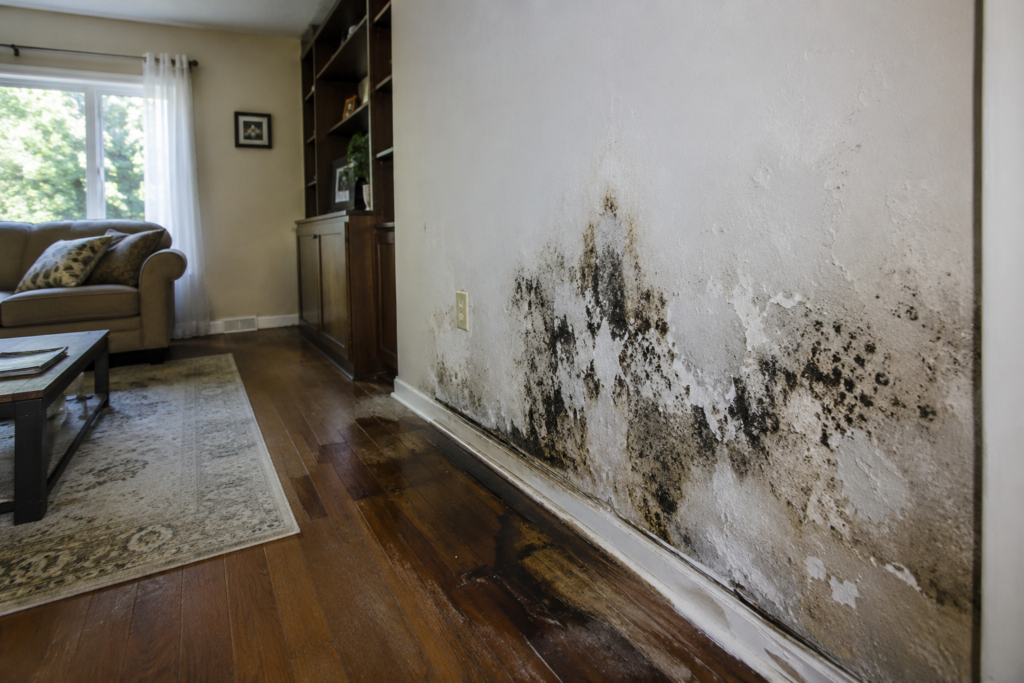
Of all the consequences of water damage, mold is the one that catches homeowners most off guard. A burst pipe, a flooded basement, a roof leak during a storm – these events are dramatic and visible. The mold that follows is neither. It grows silently inside walls, under flooring, and within structural cavities, completely out of sight, for days or weeks before it announces itself with a musty odor, a dark stain, or a family member’s worsening respiratory symptoms.
What most homeowners don’t realize is that mold doesn’t require a major flood to establish itself. Even a relatively minor water intrusion event – a slow pipe leak behind a wall, a window that let in rain during a storm, a water heater that dripped for a week before anyone noticed – can create conditions where mold takes hold within 48 hours. By the time it’s visible, it’s already well established.
This guide explains exactly how water damage creates mold risk, what the warning signs are, and why professional mold assessment and remediation after any water damage event is not optional – it’s the only way to confirm your home is genuinely safe.
The Direct Link Between Water Damage and Mold Growth
Mold requires three things to grow: moisture, a food source, and time. Every water damage event in a residential property provides all three simultaneously:
- Moisture: Any water intrusion event – flooding, pipe failure, roof leak, appliance malfunction – introduces moisture into building materials and enclosed structural spaces where it cannot evaporate naturally.
- Food source: Every standard building material in your home is a food source for mold. Drywall paper, wood framing, insulation, ceiling tiles, carpet backing, and even the dust and organic debris that accumulates inside wall cavities all provide the nutrients mold needs to colonize and spread.
- Time: Mold spores are present in virtually every indoor environment. Given the right moisture conditions and an available food source, those spores begin germinating and forming colonies within 24 to 48 hours – not days or weeks, but hours.
This is why water damage and mold are inseparable problems. Every water intrusion event that isn’t professionally dried within the 48-hour window creates a mold risk – regardless of how minor the original event appeared on the surface.
How Mold Develops After Water Damage – A Timeline
Understanding how quickly mold develops after water exposure explains why the response timeline matters so much:
- 0 to 24 hours: Water penetrates porous building materials – drywall, wood, insulation, concrete. Mold spores already present in the environment begin absorbing moisture and preparing to germinate. No visible mold yet, but the biological process has already started.
- 24 to 48 hours: Active mold germination begins on wet surfaces. The first colonies are microscopic at this stage but established. This is the critical window – professional drying started before this threshold can prevent colony formation entirely.
- 48 hours to 1 week: Visible mold spots begin appearing on surfaces. Colonies spread rapidly by releasing spores that settle on adjacent wet materials and establish new colonies. The musty odor associated with mold becomes detectable.
- 1 to 2 weeks: Mold penetrates deeper into porous materials. Surface cleaning no longer addresses the full extent of contamination. Professional remediation becomes necessary rather than preventive treatment.
- Beyond 2 weeks: Extensive mold contamination affects structural materials. Drywall, insulation, and wooden framing may require removal and replacement rather than treatment. Remediation project scope and cost increase significantly.
Where Mold Hides After Water Damage
The most dangerous aspect of post-flood mold is not where it’s visible – it’s where it isn’t. After any water damage event, mold establishes itself in areas completely inaccessible without professional moisture detection equipment:
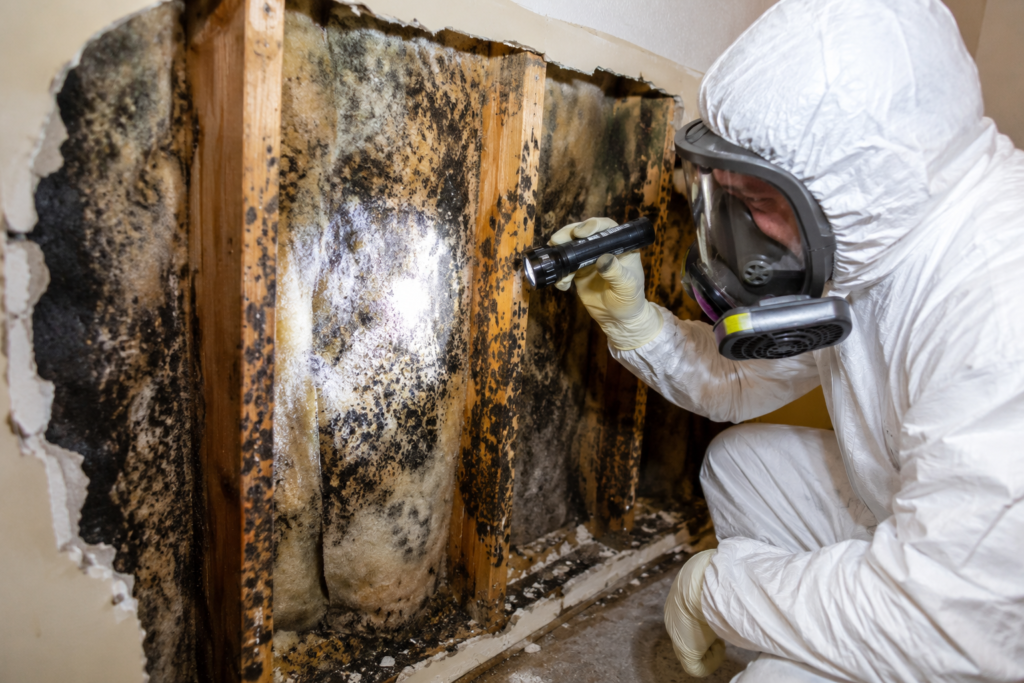
- Inside wall cavities: Water that enters wall cavities saturates insulation and wooden framing, creating a dark, humid, enclosed environment where mold grows undisturbed for weeks. The exterior surface of the wall may look and feel completely dry.
- Under flooring: Water that reaches subfloor materials wicks under finished flooring – hardwood, laminate, tile – creating the warm, moist conditions between floor layers where mold thrives invisibly.
- In attic insulation: Roof leaks saturate attic insulation, which holds moisture against wooden rafters and roof decking. Mold can establish extensively throughout an attic space before any interior ceiling staining becomes visible.
- In crawl spaces: Crawl spaces have naturally limited ventilation and higher humidity, making them particularly susceptible to mold growth after any moisture intrusion event. Mold in crawl spaces affects air quality throughout the entire home above.
- Inside HVAC ductwork: Water that enters ductwork during flooding creates an ideal mold environment – dark, humid, and with constant airflow that distributes spores throughout the home every time the system operates.
This is precisely why mold inspection services using thermal imaging cameras and professional air quality testing are an essential first step after any water damage event – finding mold where it’s growing, not just where it’s visible.
Warning Signs That Mold Has Already Established After Water Damage
Watch for these indicators that mold has taken hold following a water event:
- Persistent musty or earthy odor: A musty smell that developed after a water event – even if you can’t see any mold – is a reliable indicator of active mold growth somewhere in your home’s structure.
- Visible dark spotting on walls or ceilings: Black, green, or gray spots appearing on walls or ceilings, particularly in areas affected by water damage, are the most obvious sign of established mold colonies.
- Paint bubbling, peeling, or discoloring: Paint that begins bubbling or peeling on walls or ceilings after water damage often indicates moisture and mold activity underneath the surface.
- Worsening allergy or respiratory symptoms: Family members experiencing increased sneezing, coughing, eye irritation, or respiratory difficulty – particularly when at home – may be responding to elevated mold spore levels in the indoor air.
- Soft or discolored drywall: Drywall that feels soft, spongy, or shows discoloration months after a water event likely has active mold within or behind it.
- Warped or buckling flooring: Floor surfaces that warp or buckle after a water event often indicate moisture and potential mold growth between floor layers.
Why Water Damage Restoration and Mold Prevention Must Go Together
This is the point that most homeowners miss – and the point that leads to the most expensive outcomes. Addressing the water damage without addressing the mold risk it created is solving only half the problem.
Water damage restoration after a flooding event – whether from a burst pipe, a storm, or an appliance failure – involves extracting water, drying structural materials, and repairing what was damaged. But without antimicrobial treatment applied to all affected surfaces before walls are closed back up, and without a professional mold assessment confirming that no colonies established during the drying period, restoration is incomplete.
According to the U.S. Environmental Protection Agency (EPA), mold begins growing on wet building materials within 24 to 48 hours of water exposure and can cause significant health effects as well as structural damage. The EPA specifically recommends that any materials that cannot be thoroughly dried within 24 to 48 hours should be removed to prevent mold growth – guidance that makes clear why professional restoration with integrated mold prevention is the only responsible approach.
For homeowners in the Boise, Idaho area dealing with water damage and concerned about post-flood mold risk, the team at Boise ID Water Damage provides complete water damage restoration with integrated mold prevention – addressing both the immediate water damage and the biological risk it creates in a single coordinated process.
Professional Post-Flood Mold Removal – What It Involves
When mold has already established following a flooding event, professional remediation follows a specific protocol:
- Containment: The affected area is isolated using physical barriers and negative air pressure to prevent mold spores from spreading to unaffected areas of the home during remediation work.
- Air filtration: HEPA air filtration units run continuously during the remediation process, capturing airborne spores before they can settle in new locations.
- Material removal: Drywall, insulation, carpet, and other porous materials with active mold contamination are safely removed and properly disposed of according to remediation protocols.
- Surface treatment: All remaining surfaces in the affected area receive antimicrobial treatment to eliminate residual mold and prevent regrowth.
- Structural drying: The structural drying services process ensures all remaining structural materials reach established safe dryness levels before any replacement materials are installed – preventing mold from re-establishing behind new surfaces.
- Post-remediation verification: Air quality testing after remediation confirms that spore levels have returned to normal indoor ranges and the space is genuinely safe for occupancy.
When to Call a Professional – Don’t Wait for Visible Mold
The most important piece of advice following any water damage event is this: don’t wait for visible mold before seeking professional assessment. By the time mold is visible, it’s been growing for days – and the remediation project is already larger than it needed to be.
After any water intrusion event – regardless of how minor it appeared – a professional post-flood mold removal assessment within 24 to 48 hours determines whether mold colonies have begun establishing, identifies any areas of hidden moisture that weren’t addressed during cleanup, and confirms whether preventive treatment is sufficient or whether active remediation is needed.
This assessment is far less expensive than discovering mold contamination weeks later when it has spread extensively – and far less disruptive than a full remediation project that could have been prevented.
Final Thoughts
Water damage and mold are not two separate problems – they are two stages of the same event. Every time water enters your home’s structure and isn’t completely, professionally dried within 48 hours, it creates a mold risk. Every time mold isn’t caught and addressed early, it becomes a larger, more expensive, and more disruptive remediation project.
The answer is fast action on both fronts: professional water damage restoration that fully dries your structure, combined with professional mold assessment that confirms your home is safe. Don’t let visible water fool you into thinking the problem is solved when it’s gone from the surface. What’s inside your walls is what matters most.
Act fast, get professional help, and make sure your home is genuinely restored – not just surface-dry.
Leave a Reply