
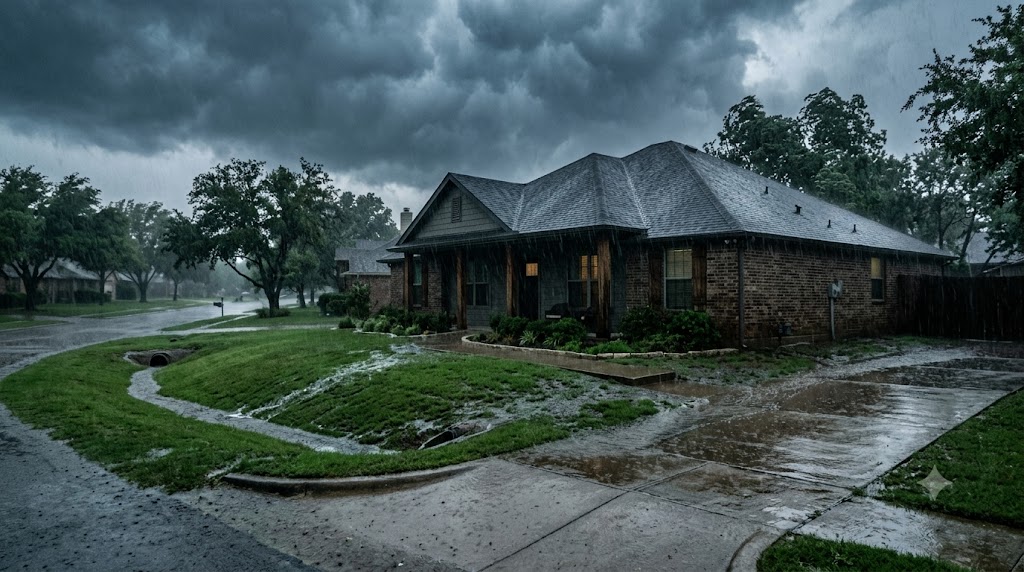
If you’ve stepped outside in Fort Worth this week, you already know the pattern: thick, sweltering humidity followed by fast-moving thunderstorms that dump an inch or two of rain in under an hour. The National Weather Service has flagged isolated to scattered flash flooding across North Texas as slow-moving storms pull rich Gulf moisture into the area, and forecasters expect the cycle of heat, humidity, and heavy downpours to continue through the rest of the summer.
For most homeowners, a passing storm means a wet driveway and maybe a soggy flower bed. But for your house, it can mean something far more serious happening behind the walls, under the floors, and above the ceiling – the early stages of a mold infestation that won’t show itself until it’s already spread.
Why Flash Flooding Is a Mold Trigger, Not Just a Water Problem
Mold doesn’t need a flood to take hold. It needs three things: moisture, warmth, and organic material to feed on (drywall, wood framing, insulation, carpet padding). Fort Worth’s summer storms hand mold all three at once.
When flash flooding pushes water against your foundation, seeps through window wells, or backs up through a low spot in the yard, that moisture doesn’t stay where you can see it. It wicks into baseboards, travels along subfloor seams, and pools in crawl spaces and basements where airflow is already poor. Add in the heat index – which regularly climbs above 105°F in Fort Worth this time of year – and you’ve created a incubator. Mold spores, which are present in every home already, can begin colonizing damp material in as little as 24 to 48 hours.
This is why the days immediately following a flash flood event are the most critical window for prevention. Waiting a week to “see if it dries out on its own” is often the difference between a simple drying job and a full remediation project.
The Areas of Your Home Most at Risk After a Storm
Crawl spaces:- If your home has a crawl space, it’s likely the first place floodwater and ground saturation reach. Poor ventilation, standing moisture, and organic wood framing make it one of the fastest places for mold to establish itself after heavy rain. Our crawl space decontamination services exist specifically because this is one of the most common – and most overlooked – sources of whole-house mold problems in Tarrant County.
Basements and lower levels:- Hydrostatic pressure from saturated ground pushes water through hairline foundation cracks even when there’s no visible flooding inside. By the time you notice a musty smell, mold has often already spread behind baseboards or under flooring. If you’ve had any water intrusion, even minor, it’s worth having your basement mold cleanup needs assessed before it becomes a bigger job.
Attics:- It seems counterintuitive, but attics are a major mold risk after storms, especially when wind-driven rain gets under roof flashing or when humidity spikes trap moisture in poorly ventilated attic spaces. Combined with Fort Worth’s brutal summer heat, attics can become a near-perfect mold environment. Our attic mold remediation team sees a noticeable increase in calls every year after the first round of summer flash flooding.
Walls and flooring near ground level:- Any area where water can wick upward – baseboards, drywall near flooring, carpet padding – is vulnerable. This is especially true in older Fort Worth neighborhoods where original construction didn’t always account for the moisture patterns we see today.
Why “It Looks Dry” Doesn’t Mean It’s Safe
One of the most common mistakes homeowners make after a storm is judging the situation by what they can see. Surface-level drying doesn’t mean the moisture is gone. Water travels, and it often ends up trapped in wall cavities, under flooring, or inside insulation – spaces where a visual check tells you nothing.
This is exactly why professional air quality testing matters after any significant water event, even if you don’t see obvious staining or smell anything unusual yet. Mold spore counts can be elevated well before visible growth appears, and catching that early is far cheaper – and far less disruptive – than treating an established colony.
If you’re unsure whether your home needs a deeper look or just a precautionary check, a mold inspection is the fastest way to get a clear answer instead of guessing.
Black Mold: The Risk Storm Season Raises the Most
Flash flooding and prolonged humidity are the two biggest drivers behind black mold cases in North Texas homes. Black mold thrives in the same dark, damp, poorly ventilated spaces that storms create – crawl spaces, wall cavities, HVAC systems that have pulled in moist air. If you’ve had recurring water intrusion this summer, or you’re noticing a persistent musty odor that wasn’t there before, it’s worth having it looked at directly by a team that specializes in black mold removal rather than treating it as a general cleaning issue.
Neighborhoods Seeing the Most Storm-Related Water Intrusion
Not every part of Tarrant County floods the same way. Older drainage infrastructure, low-lying lots, and heavier tree canopy all affect how a neighborhood handles heavy rain. We’ve seen a steady rise in storm-related mold calls this season from homeowners in Haltom City and North Richland Hills, both of which have pockets of older housing stock and drainage patterns that make standing water more likely after a fast-moving storm. If you’re in either area and had any water in your yard, garage, or lower level this week, it’s worth a precautionary check even if nothing looks visibly wrong yet.
What to Do in the First 24–48 Hours After a Flash Flood
- Address standing water immediately Don’t wait for it to evaporate – pump or wet-vac it out as soon as it’s safe to do so.
- Run fans and dehumidifiers in any area that got wet, including crawl spaces and basements.
- Check your gutters and downspouts to make sure they’re directing water away from your foundation, not pooling it against the base of your home.
- Watch for musty odors over the following week – smell often shows up before visible growth does.
- Don’t ignore minor water intrusion just because it seems small. Fort Worth’s heat and humidity turn small moisture problems into mold problems fast.
- Get a professional opinion if you’re unsure. A quick inspection is far less costly than remediation after mold has spread.
Don’t Forget Your HVAC System
Your air conditioning system works overtime during a Fort Worth summer, and that constant cycling can actually pull moisture and mold spores from damp areas of your home and circulate them through every room. If your HVAC intake is anywhere near a crawl space, garage, or basement that took on water this week, there’s a real chance your system is now spreading spores rather than just cooling the air. A musty smell coming from your vents, even a faint one, is one of the clearest early warning signs of a mold problem that professional odor elimination treatment can address before it spreads further into your living space.
This is also why relying on smell alone isn’t a reliable strategy. Some spore types produce very little odor until a colony is well established, which is another reason air quality testing is worth the small upfront cost after a significant storm event.
Don’t Wait Until You Can See It
The storms rolling through North Texas this week are exactly the kind of event that quietly sets mold growth in motion – not dramatic flooding that makes the news, but the steady, humid, water-in-places-you-can’t-see kind that shows up weeks later as a musty smell or a health issue you can’t quite explain. By the time mold is visible, it’s usually already established.
If your home took on any water this week – even just around the foundation or in a crawl space – don’t wait to see if it becomes a problem. Reach out to our team through our contact page for a fast assessment. Fort Worth’s storm season isn’t over, and getting ahead of moisture now is the easiest way to avoid a much bigger remediation job later.
Leave a Reply