
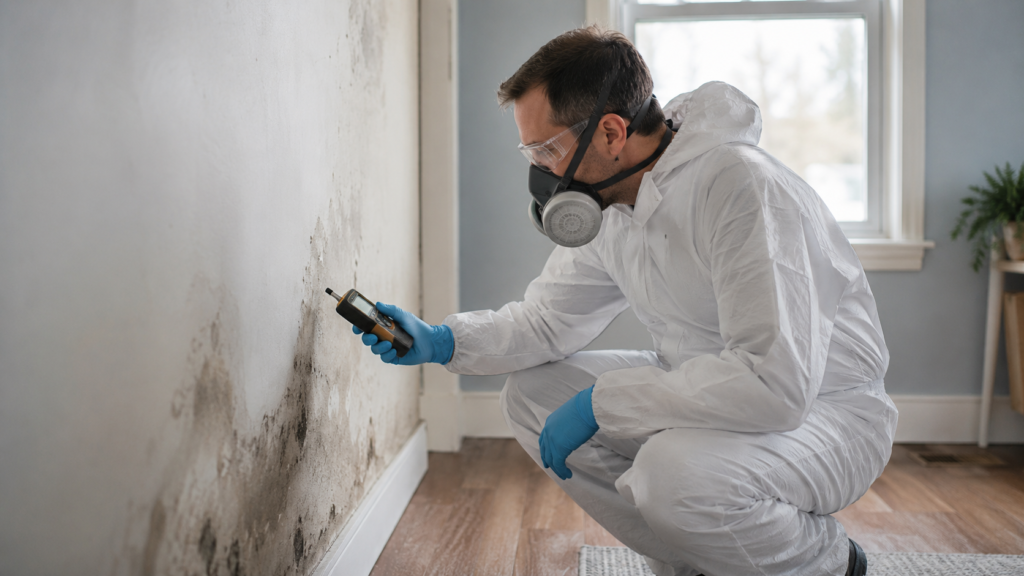
If you’ve spotted a dark stain on your ceiling or caught a musty smell drifting out of your crawl space, you’re probably asking yourself one question: do I need to call someone to test for mold, or do I need to call someone to remove it? For Fort Worth homeowners, that distinction matters more than it seems. Jumping straight to remediation without knowing what you’re dealing with can mean paying for the wrong treatment – and skipping an inspection when you already have visible black mold can waste time your family doesn’t have.
This guide walks through how to tell the difference, what each process actually involves, and when it’s time to call in a professional mold remediation team in Fort Worth.
Why Fort Worth Homes Are Especially Prone to Mold
North Texas humidity swings hard between a wet spring and a scorching, sticky summer, and that combination is exactly what mold spores need to take hold. Add in older housing stock, frequent AC condensation issues, and homes with crawl spaces or unfinished basements, and you’ve got a region where mold problems show up more often than homeowners expect. Neighborhoods throughout North Richland Hills and Haltom City see a steady stream of calls every year for exactly this reason.
The tricky part is that mold doesn’t always announce itself with the dramatic black staining most people picture. Sometimes it’s a faint smell in one room. Sometimes it’s a spike in allergy symptoms that only happens at home. That ambiguity is exactly why the inspection-versus-remediation question comes up so often.
Signs You Need a Mold Inspection First
An inspection is the right first step when you suspect a problem but can’t see or confirm it. Consider scheduling a professional mold inspection service if you’re noticing any of the following:
- A persistent musty odor with no obvious source, especially near bathrooms, kitchens, or exterior walls
- Unexplained allergy or respiratory symptoms that improve when you leave the house
- Recent water damage – a leaky roof, burst pipe, or flooding – even if it was cleaned up quickly
- Visible discoloration that could be mold, mildew, or simply dirt, and you’re not sure which
- A home purchase or sale where you want documentation of indoor air quality before closing
A proper inspection goes well beyond a visual walkthrough. Technicians use moisture meters, thermal imaging, and often air quality testing to detect spore concentrations that aren’t visible to the naked eye. This matters because mold frequently grows behind walls, under flooring, or inside HVAC systems long before it becomes visible on a painted surface. An inspection tells you not just whether mold is present, but where it’s hiding and how far it has spread – information that directly shapes what kind of remediation, if any, you actually need.
Inspections are also the smarter financial move when you’re uncertain. Remediation companies price their work based on scope, and scope is impossible to estimate accurately without knowing the extent of contamination first. Skipping this step can lead to either overpaying for a broader treatment than necessary, or underpaying for a fix that misses hidden growth.
Signs You Need Black Mold Remediation Right Away
Some situations don’t call for a diagnostic step – they call for immediate action. If you’re seeing any of the following, it’s time to move straight to black mold removal rather than scheduling an inspection first:
- Visible black, green-black, or dark slimy patches on drywall, grout, wood, or ceiling tiles, particularly in bathrooms, basements, or around windows
- Mold covering an area larger than roughly 10 square feet – the EPA’s general threshold for needing professional remediation rather than DIY cleanup
- A household member with a compromised immune system, asthma, or a mold allergy experiencing worsening symptoms
- Mold returning after a previous cleaning attempt, which usually signals moisture is still present at the source
- Mold following a major water event, like flooding or a slow, undetected leak that’s been active for weeks
Black mold, most commonly identified in homes as Stachybotrys chartarum, produces mycotoxins that can trigger respiratory irritation, headaches, and more serious reactions in sensitive individuals with prolonged exposure. Once it’s visibly established, containment and safe removal become the priority – testing at that point mostly just confirms what’s already obvious.
Professional remediation involves sealing off the contaminated area, using negative air pressure and HEPA filtration to prevent spores from spreading to the rest of the house, physically removing porous materials that can’t be fully cleaned, and treating remaining surfaces with antimicrobial solutions. This is meaningfully different from surface cleaning with bleach, which can kill visible mold on the surface while doing nothing about the roots growing inside porous materials.
The Cases Where You Need Both
In practice, a lot of Fort Worth mold calls end up combining both steps. A homeowner might see one visible patch of black mold in a bathroom, but not know whether it’s isolated or connected to a larger moisture problem elsewhere in the house. In these situations, technicians often perform a targeted inspection of the surrounding areas – attics, crawl spaces, wall cavities near plumbing – while removing the mold that’s already visible.
This is especially common in two areas of the home:
Attics. Poor ventilation and roof leaks make attic mold surprisingly common in Fort Worth, and because attics aren’t part of daily living space, problems can grow for months before anyone notices. If your inspection points upward, attic mold remediation is typically handled as its own contained project.
Crawl spaces. Ground moisture, poor vapor barriers, and limited airflow make crawl spaces one of the most frequent sources of hidden mold growth – and one of the reasons a musty smell can show up in the living room with no visible cause upstairs. If that’s the case, crawl space decontamination addresses the moisture source directly rather than just treating the smell.
How to Decide: A Quick Framework
If you’re still unsure which service applies to your situation, use this simple rule of thumb:
- Can you see and identify the mold with confidence, and is it a small, isolated patch? Start with remediation.
- Do you have symptoms, odors, or past water damage but no visible confirmation? Start with an inspection.
- Is the visible mold large, recurring, or affecting someone with health sensitivities? Skip straight to professional black mold remediation – don’t wait on testing to confirm what’s already clear enough to act on.
- Not sure at all? A short phone consultation with a local mold remediation company can usually point you in the right direction before you spend money on either service.
A Few Questions Fort Worth Homeowners Ask Often
Does homeowners insurance cover mold removal?
It depends on the cause. Damage from a sudden, covered event like a burst pipe is often included, while mold from long-term humidity or neglect usually isn’t. It’s worth asking your remediation company for documentation you can submit with a claim either way.
Can I just paint over mold instead of removing it?
No. Paint may hide surface staining temporarily, but it does nothing to address the mold growing beneath it, and trapped moisture under a fresh coat of paint often makes the problem worse.
How long does remediation usually take?
A contained, isolated area like a single bathroom wall might take one to three days. A larger job involving an attic or crawl space can take a week or more once containment, removal, and drying are all factored in.
Get a Straight Answer Before You Spend a Dollar
Mold problems rarely look the same in two different houses, which is exactly why a one-size-fits-all approach doesn’t work. Whether you need a full inspection, straightforward black mold removal, or a combination of both depending on what turns up in your attic or crawl space, the right first step is getting eyes on the actual problem.
If you’re dealing with a suspicious stain, a lingering odor, or mold that’s come back after a previous cleaning, reach out to our Fort Worth team for an honest assessment of what your home actually needs – not just an upsell to the most expensive service on the list.
Leave a Reply