
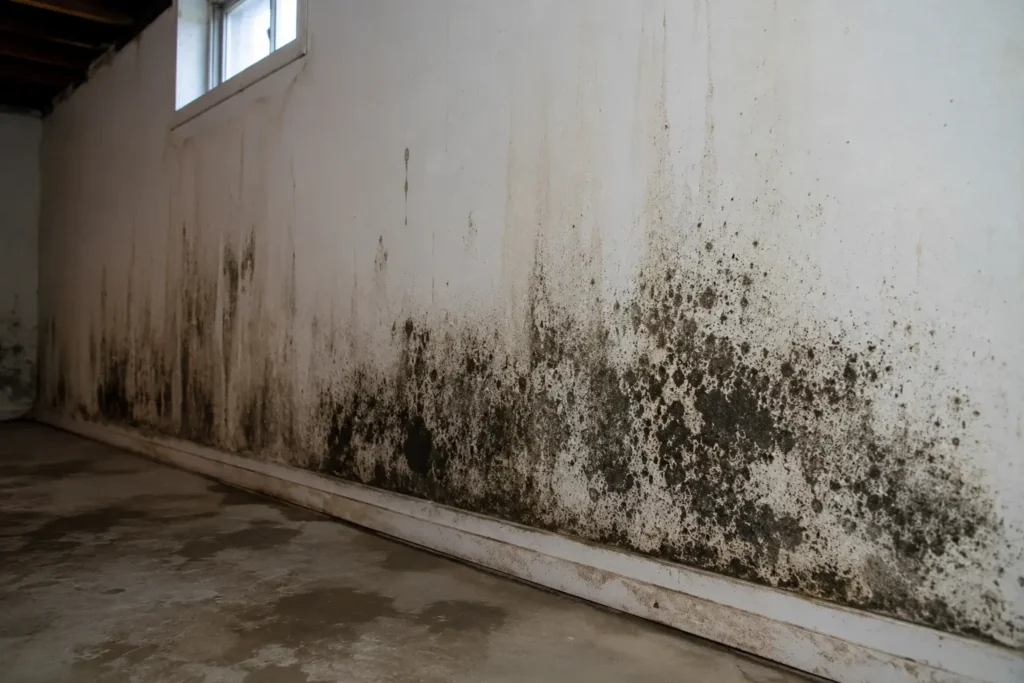
Water damage mold removal Peoria IL homeowners deal with every spring – and in Fort Worth TX, storm season creates the same problem. Water damage and mold are not two separate problems – they are two stages of the same problem. Most homeowners treat them as unrelated events, and that gap in understanding is exactly what turns a manageable water damage job into a full mold remediation situation.
Water damage mold removal Peoria IL calls come in every spring – right after Illinois River flooding season peaks. And in Fort Worth TX, the story is different but the outcome is the same – high humidity, heavy storms, and slow response times create the perfect environment for mold to establish itself inside walls, under floors, and across ceiling joists before anyone realizes what’s happening.
This post covers the real mold growth timeline after water damage, what conditions speed it up, and at what point you need professional help rather than a shop vac and a fan.
The 24–48 Hour Window – Why It’s Not Just a Saying
You’ve probably heard that mold grows within 24 to 48 hours of water damage. That’s not a scare tactic – it’s based on documented microbiology. Mold spores are present in virtually every indoor environment at low levels. They are harmless until they land on a wet surface with organic material – drywall paper, wood framing, carpet backing, insulation – and then they activate.
At room temperature with moisture present, germination begins within 24 hours. By 48 hours, early-stage colonies are forming inside wall cavities and under flooring where you cannot see them. By 72 hours, visible surface mold is often already present on exposed materials.
In Illinois homes – particularly in Peoria and surrounding central Illinois communities – spring flooding events hit during some of the most humid months of the year. That combination of warm temperatures and high ambient humidity accelerates the timeline even further.
What Mold Actually Needs to Grow – The Four Conditions
Understanding why mold grows so fast after water damage comes down to four conditions it needs:
- Moisture – Any surface with more than 16–20% moisture content is at risk. After a flooded basement, most porous materials exceed this within hours.
- Organic material – Drywall paper, wood studs, carpet, insulation. Standard building materials are essentially mold food.
- Temperature – Mold grows fastest between 60°F and 80°F. That’s indoor room temperature in both Illinois and Texas for most of the year.
- Time – This is the only factor you can actually control. Everything else is already present. Time is what you’re racing against.
Remove the moisture fast enough and you break the chain. That’s the entire logic behind professional water damage drying – not just getting the floor dry, but pulling moisture out of structural materials before the 48-hour window closes. According to CDC guidelines on indoor mold, controlling moisture is the single most effective way to prevent mold growth inside any structure.
How the Timeline Differs Between Illinois and Texas Homes
Both Illinois and Texas homeowners deal with mold after water damage – but the conditions driving it are different in each state.
In Illinois – especially Peoria, where the Illinois River creates seasonal flood pressure from March through June – the main trigger is groundwater intrusion and basement flooding. Older homes with block foundations absorb water rapidly, and the cool spring temperatures slow drying while humidity stays high. Mold growth in these conditions tends to start inside wall cavities first, making it invisible until it’s well established.
In Fort Worth TX, the drivers are different – high summer humidity, storm surges, and roof leaks during heavy rain events. Attic mold and crawl space mold are more common here than basement mold, simply because most Texas homes don’t have basements. The heat accelerates mold growth significantly – a wet attic in July in Fort Worth can show visible mold in under 24 hours.
Same problem, different environment. The timeline is the one thing that doesn’t change regardless of your ZIP code.
Warning Signs Mold Has Already Started After Water Damage
If you’ve had water damage in the last few days and you notice any of these, mold has likely already begun:
- Musty or earthy smell that wasn’t present before the water event
- Discoloration on drywall – grey, green, or black patches, even small ones
- Drywall that feels soft or bubbled when you press it
- Visible dark spots at the base of walls or along floor edges
- Allergy symptoms in family members that appeared suddenly after the flooding
The smell is often the first signal – and it matters because it means mold has already progressed past the spore germination stage. Visible growth is actually a later indicator. By the time you can see it, there’s typically significantly more growth behind the surface you’re looking at.
Our post-flood mold removal process always starts with moisture meter testing and air quality sampling before any visible mold is even addressed – because the invisible growth is what causes the most long-term damage.
What Happens If You Dry the Water But Skip the Mold Check
This is one of the most common and costly mistakes homeowners make. The floor looks dry. The walls feel dry to the touch. You assume the problem is handled.
What’s actually happening is that moisture has migrated into the wall cavity, the subfloor, and the framing – areas that a household fan and dehumidifier cannot reach effectively. Surface dryness does not equal structural dryness.
Our black mold removal team regularly works on properties where a water damage event happened weeks earlier and was considered “handled” – only to find active mold colonies behind drywall that looked completely fine from the outside.
The fix at that stage involves drywall mold removal, structural drying, antimicrobial treatment, and in some cases full wall reconstruction – a job that costs significantly more than addressing it within the first 48 hours would have.
When Water Damage Becomes a Mold Remediation Job – The Crossover Point
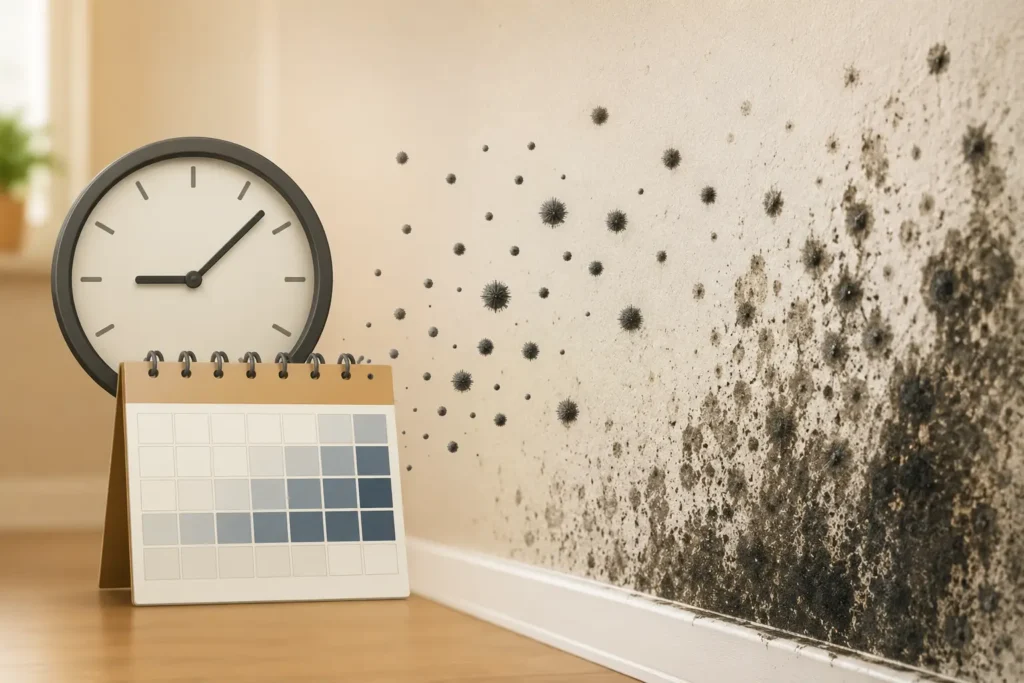
There’s a clear point where water damage cleanup transitions into mold remediation territory:
- Any wet porous material – drywall, insulation, carpet – that was not dried within 48 hours
- Any water intrusion event where professional drying equipment was not used
- Any visible mold, regardless of size – even a small patch indicates a larger colony behind it
- Any musty odor that persists after surface drying is complete
- Any flooding involving groundwater, river water, or sewage – these carry mold spores as well as bacteria
For Illinois homeowners dealing with flooding after heavy rains, particularly those managing water damage mold removal Peoria IL situations, the crossover often happens faster than expected because of the seasonal humidity and the age of the housing stock in central Illinois.
At this stage, a professional mold inspection is not optional – it’s the only way to know what’s actually happening inside your walls before deciding on a remediation plan.
What Professional Mold Remediation After Water Damage Actually Involves
A proper remediation job after water damage is not just spraying something on a wall and calling it done. The process follows specific steps:
- Moisture assessment – Moisture meters and thermal imaging to identify all wet areas, including hidden ones
- Containment – Affected areas are isolated using mold containment setup to prevent spore spread during removal
- Material removal – Any porous material that cannot be dried and cleaned is removed and disposed of properly
- HEPA vacuuming and antimicrobial treatment – All surfaces in the affected area are treated to eliminate spores
- Air quality testing – Post-remediation verification confirms spore counts have returned to normal levels
- Structural drying – Any remaining moisture in structural components is fully dried before reconstruction begins
Skipping any of these steps is what leads to mold returning within months of remediation – a complaint we hear regularly from homeowners who went with a cut-rate option the first time.
Final Thought – The Clock Starts the Moment Water Enters
Every hour between when water enters your home and when professional drying equipment arrives is an hour closer to a mold problem. The 24–48 hour window is real, and in humid environments like Peoria IL or Fort Worth TX, it can be even shorter.
If you’ve had water damage recently – whether it was a burst pipe, a flooded basement, or storm intrusion – and you’re not certain it was dried professionally, get a mold inspection scheduled before the symptoms appear. It costs significantly less than treating the mold after it’s already inside your walls.
Call (817) 508-6755 – our Fort Worth team is available 24/7 and can assess your situation immediately.
Leave a Reply