
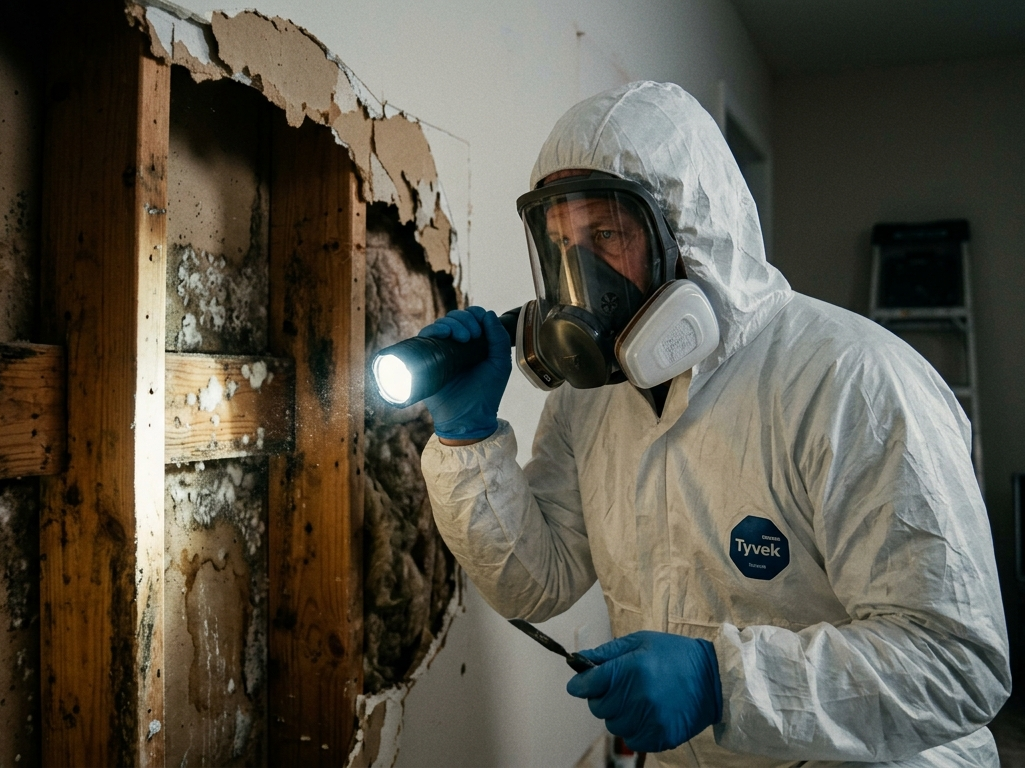
For many homeowners in the Dallas-Fort Worth Metroplex, the discovery of mold is a moment of high stress. Whether it is a dark patch in the corner of a basement, a fuzzy growth behind a bathroom vanity, or that unmistakable musty odor in the attic, the instinct is always the same: Get rid of it immediately.
However, as experts in the industry, we often see homeowners make a critical mistake. They focus entirely on the mold remediation process while ignoring the root cause that allowed the spores to colonize in the first place: Deep-seated moisture.
Cleaning mold without first performing a professional water extraction is like mopping a floor while the faucet is still running. You might clear the visible mess, but the disaster is still happening beneath the surface. In this guide, we will explore why mold and water damage are two sides of the same coin and why your home’s recovery depends on addressing both simultaneously.
The 48-Hour Rule: The Link Between Water and Mold
Mold spores are omnipresent. They are in the air we breathe and on the surfaces we touch. Under normal, dry conditions, these spores are harmless and dormant. They only become a threat when they find three things: food (organic material like drywall or wood), warmth, and-most importantly-moisture.
When a pipe bursts, a roof leaks, or an HVAC system overflows in a Fort Worth home, the clock starts ticking. Research shows that mold colonies can begin to form in as little as 24 to 48 hours after water exposure. This is why emergency mold services are so closely tied to water events. If the water is not removed and the structure is not dried to professional standards, mold is not just a possibility-it is an inevitability.
The Myth of “Air Drying”
A common error homeowners make after a leak is assuming that if the area “feels dry” to the touch, the danger has passed. They might set up a few household fans and open the windows. Unfortunately, household fans only move air across the surface; they do nothing to address the moisture trapped inside porous materials.
Drywall, insulation, and wood studs act like sponges. Even when the surface looks clean, the “inner core” of these materials remains damp. This creates a “mold incubator” inside your walls. If you perform black mold removal on the drywall surface but leave the damp insulation behind it, the mold will return within weeks, often more aggressively than before.
To prevent this, it is vital to engage in a comprehensive water damage restoration in Fort Worth before the final remediation steps are taken. Professional restoration ensures that “dry” actually means dry at a structural level.
Why Professional Water Extraction is Mandatory for Mold Success
Professional water damage experts use tools that the average homeowner simply doesn’t have. To ensure your mold problem doesn’t become a recurring nightmare, the following steps are essential:
1. Thermal Imaging and Moisture Mapping
Before a mold inspection even begins, technicians use infrared cameras to see “through” walls. These cameras detect temperature differences that indicate hidden pockets of water. If these pockets are missed, any mold cleaning you do will be temporary.
2. Industrial-Grade Dehumidification
Mold thrives in high humidity (anything above 60%). While you are cleaning mold spores from your furniture or walls, industrial dehumidifiers are working to pull gallons of water out of the air. This “dries out” the spores, making them easier to kill and preventing new ones from landing and growing.
3. Structural Drying
This involves the use of high-velocity air movers. Unlike a box fan, these tools are designed to force air into the pores of the wood and drywall, pulling moisture out of the “middle” of the material. This is the only way to ensure the air quality in your home returns to safe levels.
The Dangers of “DIY” Mold Cleaning on Wet Surfaces
We often see homeowners attempt to use bleach to scrub mold off a wet wall. This is a recipe for disaster.
First, bleach is mostly water. When you scrub a porous surface like drywall with bleach, the chlorine stays on the surface, but the water soaks into the wall, actually feeding the mold roots (hyphae) that are deep inside the material.
Second, if the wall is still damp, the physical act of scrubbing releases millions of mold spores into the air. Without professional containment and HEPA air scrubbing-standard parts of a professional mold remediation protocol-you are simply spreading the infestation to other rooms in your house through your HVAC system.
Structural Integrity: What’s at Stake?
Ignoring the water damage side of the equation doesn’t just lead to mold; it leads to structural failure. When wood studs stay damp for extended periods, they begin to undergo “brown rot” or “white rot.” This weakens the load-bearing capacity of your home’s frame.
By the time you notice attic mold or basement mold, the moisture may have already begun to compromise the fasteners and joints of the building. A combined approach of water extraction and mold sterilization is the only way to protect the long-term value of your property.
How to Handle a Mold and Water Discovery
If you find mold in your Fort Worth property, follow these steps to ensure a permanent fix:
- Stop the Leak: You cannot fix mold until you fix the plumbing or roofing issue.
- Containment: Close doors and windows to the affected area. Turn off your HVAC system to prevent mold spores from traveling to other rooms.
- Moisture Testing: Have a professional conduct mold testing and moisture mapping to see how far the water has traveled.
- Extraction and Drying: This is the most critical step. Ensure a dedicated team performs high-level water removal to “starve” the mold of its lifeblood.
- Remediation and Sterilization: Once the “dry standard” is met, the mold can be safely removed, and the area can be treated with antimicrobial agents.
Conclusion: Two Problems, One Solution
Mold is rarely a standalone problem. It is almost always a secondary symptom of a primary water intrusion. To truly protect your family’s health and the air quality of your home, you must respect the science of drying.
By coordinating your remediation efforts with professional water extraction, you ensure that your home remains a safe, dry, and healthy environment. Don’t just clean the surface-fix the source.
Leave a Reply